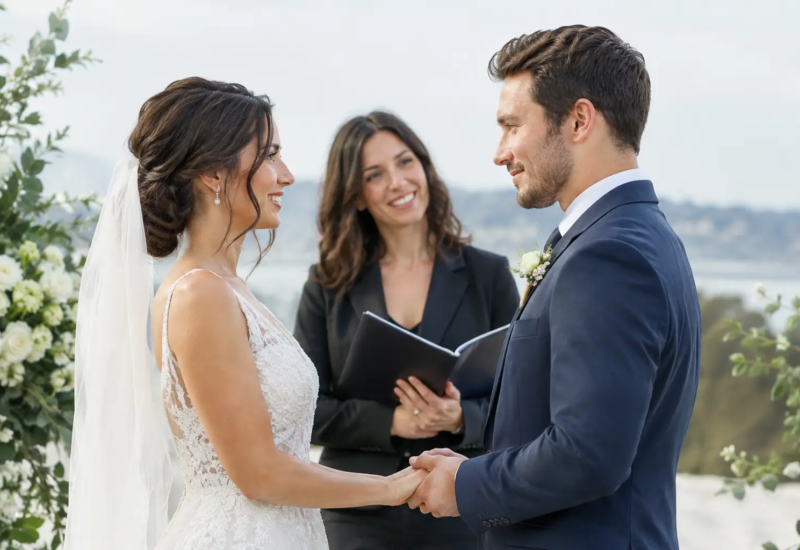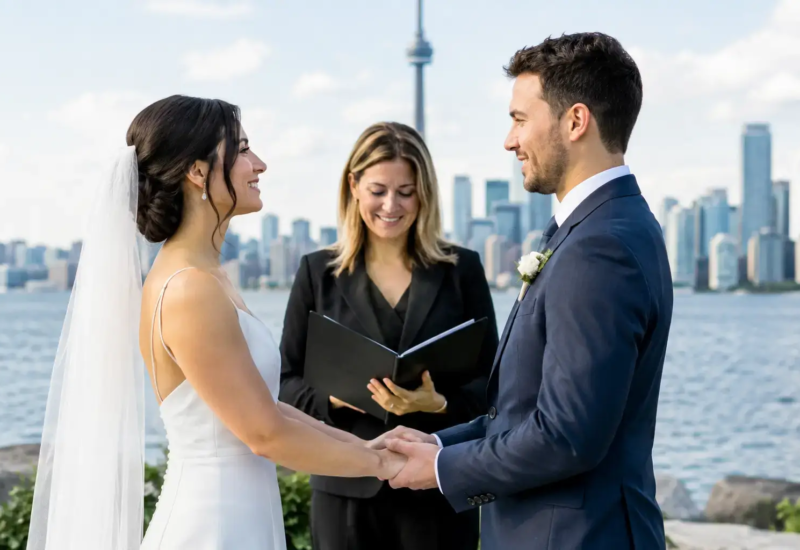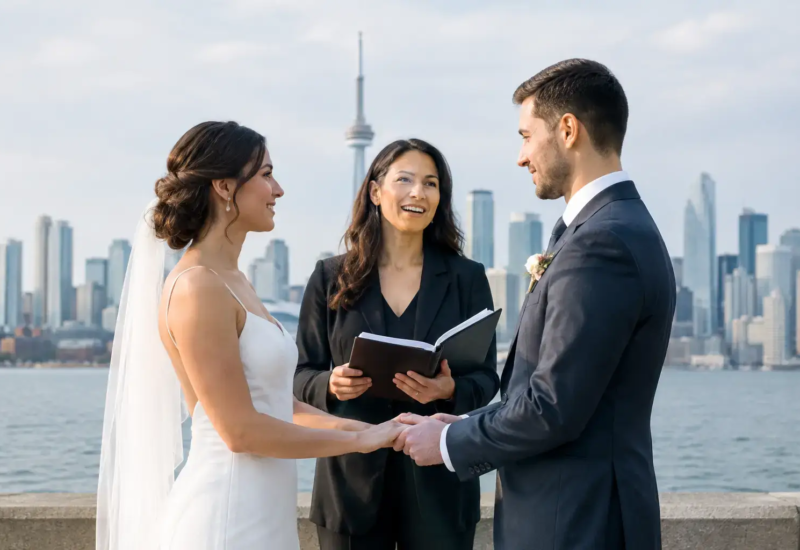

A symbolic ceremony officiant Toronto couples choose is not simply there to read a script. They are there to hold the room with care: to give shape to the promises, family histories, beliefs, and quiet moments that have brought two people to the same threshold.
For many couples, the wedding ceremony is not meant to be a performance of tradition. It is a chance to speak honestly, in front of the people who matter, in language that feels like their own. A symbolic ceremony offers that freedom, while a separate legal signing can ensure the administrative side of marriage is handled with equal attention.
What makes a ceremony symbolic?
A symbolic ceremony is a meaningful wedding celebration that is not, on its own, the legal act of marriage. It may take place after a private legal signing, before a civil ceremony, or on an entirely different day. This distinction gives couples more choice about where, when, and how they gather.
Perhaps you want to exchange vows in a family garden, at an intimate restaurant, in a gallery, or in a space that carries personal significance. Perhaps you are marrying across faiths, honoring more than one cultural tradition, or creating a secular ceremony that still feels reverent. A symbolic ceremony can make room for all of this without forcing the day into a rigid format.
It can also be the right choice when the legal requirements need to happen quietly. Some couples prefer a short, private signing with the required documents and witnesses, followed by a fuller ceremony later with loved ones. Others are renewing their vows or marking a commitment that does not require legal registration at all.
The point is not to make the ceremony feel less real because it is symbolic. The point is to give the emotional experience the time, language, and setting it deserves.
The legal distinction deserves clarity
In Ontario, a legally valid marriage requires more than a heartfelt exchange of vows. There are specific legal steps, including the appropriate marriage documentation and an authorized person who can solemnize the marriage. A symbolic ceremony does not replace those requirements.
That is not a limitation. It is often a relief. Once the legal and ceremonial pieces are understood, couples can make decisions without uncertainty. You may choose to complete a legal signing before your celebration and then have a symbolic ceremony that is fully focused on your story. Or you may combine a legal marriage ceremony with personal elements, depending on your needs and the officiant’s service offering.
A thoughtful officiant should explain the difference plainly, without making the process feel intimidating. Legal accuracy matters because the paperwork represents a real change in status. The ceremony matters because it is where that change is witnessed, felt, and remembered.
What a symbolic ceremony can include
There is no single template for a symbolic wedding. Some couples want a ceremony of fifteen quiet minutes. Others want a more layered experience with readings, family acknowledgments, music, and personal vows. Both can be deeply moving when every element has a reason to be there.
A custom ceremony might begin with a welcome that reflects the atmosphere you want to create: warm, lighthearted, spiritual, secular, or a careful blend. It may include the story of how you met, what you have learned from one another, and the values you are choosing to carry forward. Your vows can be self-written, lightly guided, or supported with language that helps you say what feels difficult to say aloud.
You may include a ring exchange, a handfasting, a unity ritual, a tea ceremony, a family blessing, or a moment of silence for those who cannot be present. Interfaith and multicultural elements can sit alongside one another with respect when they are introduced with care rather than treated as decorative additions.
The most memorable ceremonies tend to be selective. They do not need every possible ritual. They need a clear emotional center and enough room to breathe.
Choosing a symbolic ceremony officiant in Toronto
The right symbolic ceremony officiant in Toronto will bring both warmth and structure. Personalization is not achieved by inserting a few names into a generic script. It comes from listening closely enough to understand what should be said, what should remain private, and what tone will feel natural when you are standing in front of the people you love.
During an initial conversation, notice whether the officiant asks thoughtful questions. Do they want to know how you met, but also how you make decisions together? Do they ask about faith, family dynamics, cultural traditions, and the kind of feeling you want guests to carry away? These details shape a ceremony more than dramatic language ever could.
It also helps to understand the writing process. Will you review the ceremony in advance? Can you choose readings or make edits? Is there guidance if you are writing personal vows for the first time? A collaborative process allows the ceremony to sound polished without becoming distant from your real voice.
Presence matters, too. An officiant sets the pace of the ceremony. They can bring calm to a nervous room, offer gentle direction when emotions rise, and avoid rushing through the words that deserve to land. This is especially valuable for intimate weddings, where there is little distance between the couple and their guests. Every pause is felt.
Consider the format before you choose the words
A symbolic ceremony works best when its practical shape is decided early. Think about guest count, location, timing, accessibility, sound, and whether you will hold a rehearsal. A ceremony in a private home has different needs than one in a downtown venue or outdoor setting. If guests will be standing, a concise format may serve everyone better. If the ceremony includes several family contributions, a rehearsal can bring confidence and ease.
The length should reflect the experience you want. A brief ceremony can feel elegant and complete. A longer one can offer more context, readings, and ritual. Neither is inherently better. It depends on whether you want the ceremony to be a focused opening to the celebration or the central gathering of the day.
You should also decide how public you want your personal story to be. Some couples want laughter and detailed memories woven throughout. Others prefer a more universal reflection on partnership, saving intimate stories for their vows. There is no obligation to disclose more than feels comfortable. A well-written ceremony respects the boundary between what is meaningful and what is private.
A ceremony that reflects your actual life
The strongest symbolic ceremonies do not imitate someone else’s wedding. They reflect the relationship in front of the officiant: the people you are, the commitments you are making, and the community that has helped bring you here.
For a couple with different backgrounds, this may mean giving both traditions genuine space. For a secular couple, it may mean creating a grounded sense of occasion without religious language. For a vow renewal, it may mean acknowledging not only romance, but also the years of ordinary care, endurance, and shared change that have made the promise deeper.
At AHANSA Life Foundation, this work is approached with an understanding that marriage is both a legal milestone and a deeply human one. Couples deserve clear guidance on the administrative details, along with a ceremony that does not feel borrowed from a stranger’s day.
A symbolic ceremony gives you permission to separate what must be done legally from what you most want to say publicly. With a steady officiant, careful writing, and an atmosphere that feels true to you, the moment can be simple without being slight. It can be quiet, personal, and still carry the full weight of your most important yes.