A ceremony can become strained when it asks one partner to stand outside their own history. It can also feel incomplete when two meaningful traditions are placed beside each other without context, care, or a shared purpose. The right interfaith wedding officiant helps create something more thoughtful: a ceremony where both people are recognized fully, and where every word has room to land.
For many couples, an interfaith ceremony is not about finding a perfect fifty-fifty balance. It is about making intentional choices. Which customs feel essential? Which language feels honest? What do you want your family and community to understand about the life you are building together?
What an interfaith ceremony can hold
Interfaith weddings are often described as a blend of traditions, but that word can make the process sound simpler than it is. A meaningful ceremony does not need to borrow equally from two faiths, include every family expectation, or turn sacred practices into decoration. It should reflect the couple’s real relationship with belief, culture, family, and one another.
For some, that may mean incorporating a blessing, reading, ritual, or music from each tradition. For others, it may mean creating a mostly secular ceremony that honors the spiritual values both partners share: gratitude, hospitality, service, compassion, devotion, or the care of community. A couple may also choose to include a moment that acknowledges parents and elders, especially where family blessing carries deep significance.
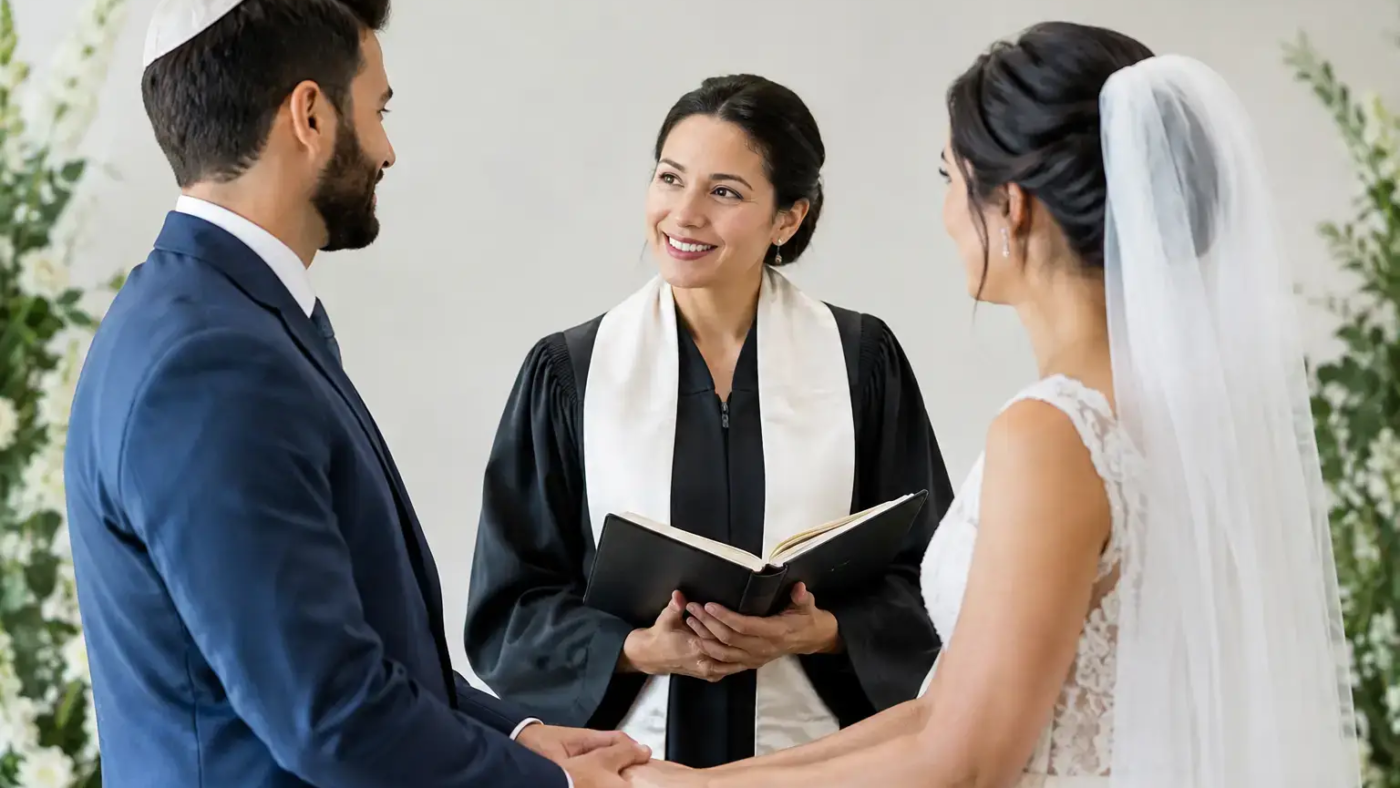
There is no single correct form. The most grounded ceremonies are often the ones that are clear about what they are and are not. A Jewish and Muslim couple may choose to include a chuppah-inspired canopy and a reading about mercy, without presenting either element as a formal religious rite. A Christian and Hindu couple may share vows in a civil ceremony, then reserve specific religious rituals for a separate family gathering. The shape of the day depends on your beliefs, your comfort, and the people you hope to include.
The role of an interfaith wedding officiant
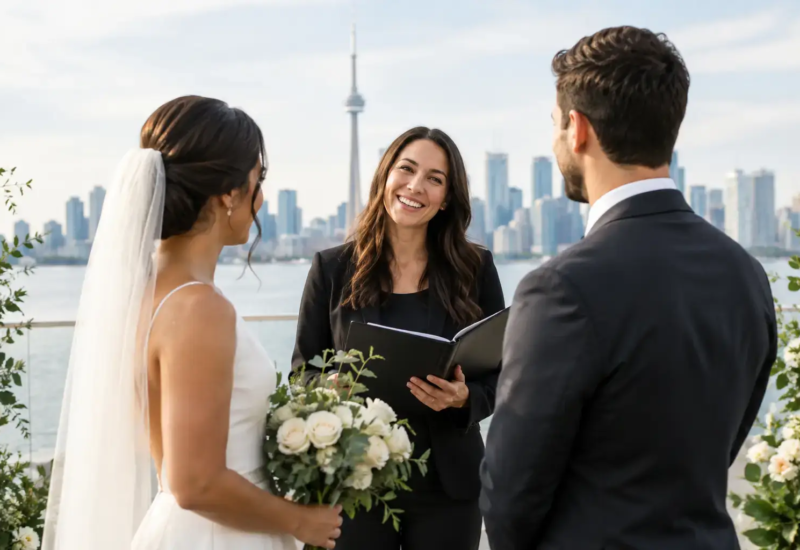
An interfaith wedding officiant does more than read a script and pronounce a marriage. They hold the center of a room that may contain different customs, expectations, and emotional stakes. Their work is to guide the ceremony with steadiness, ensuring that neither partner’s background is minimized and that guests understand the meaning behind what they witness.
That requires careful listening. Before writing begins, an officiant should want to know how each of you relates to your tradition. Perhaps one of you practices actively while the other feels culturally connected. Perhaps faith is private, while family heritage is not. Perhaps you are both spiritual but do not belong to a formal religious community. These distinctions matter because they shape the language of the ceremony.
A skilled officiant also knows when to offer gentle structure. Some rituals have particular religious requirements and should be led by an authorized clergy member or observed in a separate setting. Others can be respectfully adapted within a civil or personalized ceremony. Clear guidance protects the integrity of the moment and helps prevent confusion for you or your guests.
Start with the conversations that matter
Before choosing readings or deciding on rituals, make space for a conversation between the two of you. Talk about what marriage means in your families, what you want to carry forward, and what you do not want included. This is not a test of commitment to a faith or culture. It is a way to understand the emotional weight behind each choice.
You may find it helpful to discuss a few questions in private. Which traditions would make you feel seen on the day? Are there words, prayers, or symbols that feel uncomfortable or inauthentic? What role do you want parents, siblings, or elders to play? Are there expectations that need a kind but firm boundary?
These conversations can reveal places where compromise is needed. A ritual may be deeply important to one partner but unfamiliar to the other. A family may hope for a religious component that the couple does not wish to include. The goal is not to avoid every difficult feeling. It is to make decisions with honesty, so your ceremony does not carry unspoken tension.
How to choose the right officiant
Your first consultation should feel calm, not transactional. Notice whether the officiant asks thoughtful questions before suggesting a formula. They should be comfortable with nuance and able to speak plainly about what they can offer, what may require clergy involvement, and how the legal portion of the ceremony will be handled.
Ask how they approach religious and cultural elements that are not their own. Respect is more than correct pronunciation, though that matters. It includes understanding context, avoiding assumptions, and being willing to say when a tradition should be guided by someone from within the faith community.
It is also reasonable to ask about the ceremony-writing process. Will you review the script? Can you choose the tone of the language around God, spirituality, or family? How are personal stories handled? A bespoke ceremony should sound like the two of you, not like a generic script with a few names changed.
Practical confidence matters here, too. If you are having a legally binding wedding, confirm that your officiant is authorized to solemnize marriages where you will marry and understands the required documents and signing process. In Ontario, the legal requirements and ceremonial choices are related but distinct. A personal, interfaith ceremony can still be organized with precision around the legal essentials.
At AHANSA Life Foundation, this balance is approached with both ceremony care and legal fluency. Couples can choose the level of support that suits their day, from a concise legal signing to a fully officiated custom ceremony with rehearsal guidance.
Creating a ceremony that feels coherent
An interfaith ceremony does not need many elements to feel complete. In fact, restraint can make each choice more meaningful. When you include a ritual, offer a brief explanation so guests understand its purpose. When you use a reading, choose one that genuinely reflects your values rather than one that sounds traditionally wedding-like.
The ceremony also benefits from a clear emotional arc. It might begin by welcoming the families and naming the significance of two backgrounds coming together. It can move into a brief reflection on the couple’s story, followed by readings, vows, rings, and any chosen ritual. The legal declaration and signing should be handled smoothly, without breaking the sense of occasion.
Language deserves particular attention. Some couples want explicit references to God, faith, or prayer. Others prefer language about love, commitment, and shared values. Many land somewhere in between. There is room for phrases that honor belief without asking either partner to speak words that do not feel like their own.
Make room for family without losing yourselves
Families often bring love, pride, and strong ideas about what a wedding should look like. Their hopes may come from a sincere desire to see their heritage respected. Still, the ceremony belongs to the couple entering the marriage.
A thoughtful officiant can help you find gracious ways to include family. A parent may offer a blessing. An elder may participate in a ritual. A reading can be shared in a family language, followed by an English translation or a brief explanation. These gestures can create connection without requiring you to hand over the shape of the ceremony.
If a request does not align with your wishes, clarity is kinder than vagueness. You might say that you are honoring the tradition in a different way, or that you are keeping the ceremony focused on the commitments you both feel comfortable making. Boundaries can be expressed with warmth. They are still boundaries.
A steady presence for your most important yes
The best interfaith ceremonies do not try to resolve every difference between two families, faiths, or life stories in twenty minutes. They do something quieter and more lasting. They acknowledge where you come from, honor what you hold dear, and make room for the marriage you are choosing now.
When the ceremony is written with care and led with a steady presence, you do not have to perform a version of yourselves for anyone else. You can stand together, hear your own promises clearly, and begin with a sense that the day made room for all that matters.