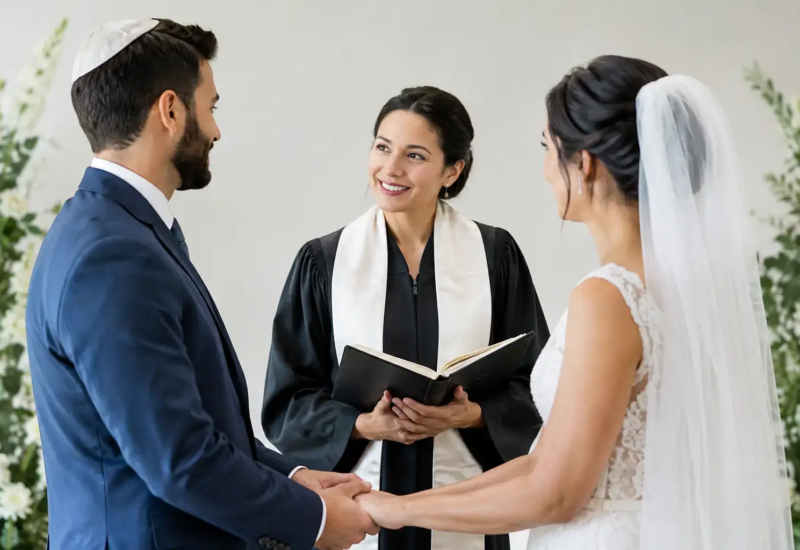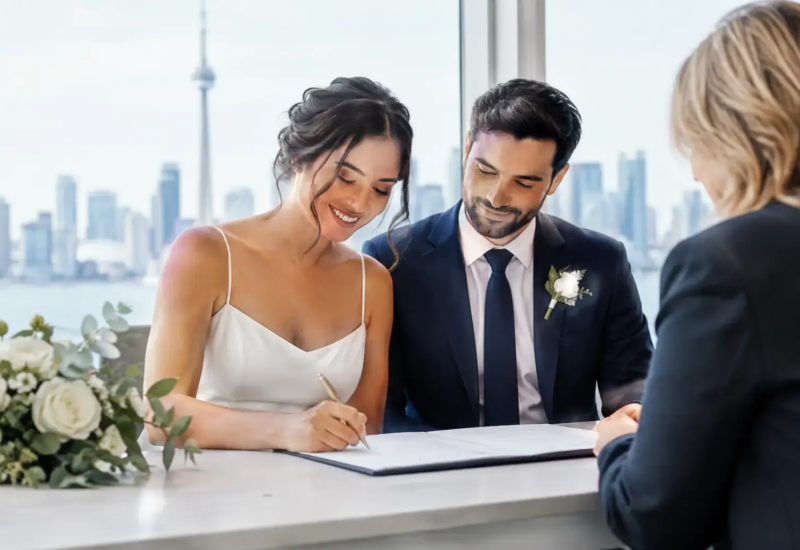
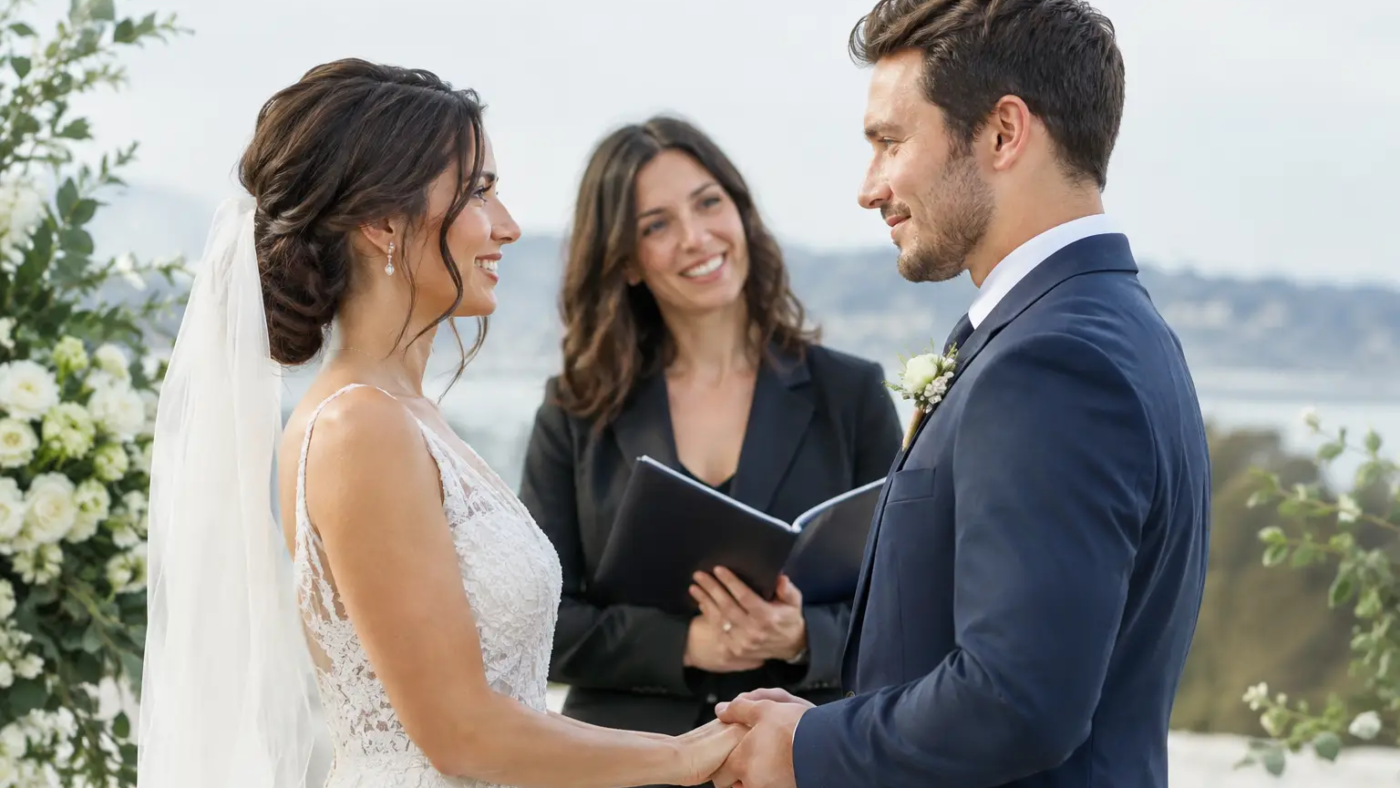
A ceremony can be brief without feeling rushed, and personal without asking either of you to perform your private life for a room full of people. A custom wedding script creates that balance. It gives shape to the moment you say yes while leaving room for your natural voices, your beliefs, and the people who have come to witness you.
For many couples, the concern is not whether the ceremony will be beautiful. It is whether it will feel recognizable. Will the words sound like something you would actually say? Will the legal portion be handled with care? Will there be space for joy, stillness, and perhaps a few tears, without turning the occasion into a production?
A well-written ceremony answers those questions quietly. It holds the legal milestone and the human threshold together.
What a Custom Wedding Script Actually Holds
A custom script is more than a collection of readings, vows, and formal declarations. It is the architecture of your ceremony. It guides everyone present from arrival to celebration, giving the occasion a calm rhythm and making clear why this gathering matters.
At its center is your relationship story. Not every detail needs to be shared. In fact, restraint is often what makes a ceremony feel more intimate. A thoughtful script may speak to the way you support one another, the values you return to, the humor that carries you through difficult days, or the decision you have made to build a life with greater intention.
The script also makes room for the form of marriage that feels right to you. Some couples want a fully civil ceremony with straightforward language. Others want spiritual references without a formal religious structure. Interfaith, secular, cultural, and blended-family ceremonies each call for their own care. The goal is not to fit your relationship into a preset format. It is to create a ceremony where both people feel seen.
For legally valid weddings, the words must also sit within the applicable legal requirements. Personalization does not replace the necessary declarations, documentation, or authority of the officiant. The best experience is one in which those essential elements are handled clearly, without interrupting the warmth of the moment.
Custom Wedding Script: Personal, Not Performative
There is a difference between personal and overly exposed. Couples sometimes worry that a bespoke ceremony will require them to share their entire history, explain every challenge, or make grand promises that do not feel natural. It does not.
A personal ceremony can be understated. A single detail about how you met, a sentence about the home you are creating, or a reflection on the steadiness you offer one another can carry more meaning than a long retelling of your relationship. Every word lands differently when it has been chosen with purpose.
This is especially valuable for intimate weddings and micro celebrations. In a smaller room, language feels closer. Guests notice the pauses, the tenderness, and the truth of what is said. A script that is too generic can feel distant. One that is too elaborate can feel out of proportion to the gathering. The right tone is often simple, warm, and specific.
It also depends on who will be in the room. If you are bringing together families with different faiths, cultures, or expectations, the ceremony can acknowledge that complexity without trying to resolve it publicly. Inclusive language does not erase difference. It gives difference a respectful place to stand.
Begin With the Feeling You Want to Create
Before choosing readings or deciding whether to include a unity ritual, begin with a more useful question: how do you want the ceremony to feel?
You may want it to feel quiet and grounded. You may want guests to laugh warmly, then settle into a moment of real stillness. You may want the focus to remain on your vows, with little else around them. Couples who know the feeling they are seeking can make clearer decisions about every other element.
A consultation should make room for these preferences. It is also the place to name what you do not want. Perhaps you would rather avoid religious language, public advice about marriage, references to destiny, or a long account of your courtship. Perhaps you want to honor a parent or loved one without placing them at the center of the ceremony. Clear boundaries are part of meaningful personalization.
From there, the structure becomes easier to shape. A ceremony often includes a welcome, an opening reflection, an acknowledgment of family or community, a relationship story, vows, the legal declarations where required, the exchange of rings, a pronouncement, and a closing. Not every ceremony needs every element. What matters is that the progression feels natural and that there is room to breathe.
Let Your Vows Be the Center, If You Want Them To Be
Personal vows can be deeply moving, but they are not a requirement for a meaningful ceremony. Some couples feel most comfortable writing their own promises. Others prefer to repeat vows that have been carefully prepared in advance. A third option is a blend: each person shares a few personal lines, followed by shared vows that ensure both partners make the same core commitments.
If you are writing your own vows, aim for honesty rather than polish. Consider what your partner can count on from you, what you admire in them, and what you intend to protect in the life you are building. You do not need to write a speech. One or two minutes per person is often enough.
A custom script can support the vows rather than compete with them. When the rest of the ceremony is calm and well-paced, your promises have space to be heard.
Choose Rituals for Meaning, Not Decoration
Unity candles, handfasting, wine ceremonies, cultural blessings, and ring warming can all be beautiful. They can also feel disconnected if they are included simply because they appeared in another wedding.
The question is whether a ritual expresses something you genuinely value. A handfasting may speak to shared commitment. A tea ceremony may honor family and heritage. A moment of silence may create space for a loved one who cannot be present. When a ritual belongs in your ceremony, explain it simply so guests understand its place.
For some couples, no additional ritual is the right choice. A clear exchange of vows and rings, witnessed by the people closest to you, is already complete.
The Legal Portion Deserves Calm Attention
A marriage ceremony carries emotional weight, but it is also a legal event. Couples should understand what is required in their jurisdiction, who is authorized to officiate, what documents must be present, and how the marriage registration will be completed after the ceremony.
This is where professional guidance matters. Legal details should not become a source of uncertainty in the final days before your wedding. A prepared officiant can explain the process in plain language, keep the required elements organized, and ensure the ceremony moves forward with confidence.
For couples in North York, Toronto, and the Greater Toronto Area, AHANSA Life Foundation approaches this balance with particular care. The work is informed by legal fluency and a composed, personalized officiating style, so the administrative side of marriage is treated seriously without becoming the emotional center of the day.
A legal signing service may be appropriate when you want a concise, private completion of the required formalities. A fully officiated ceremony is better suited to couples who want the legal elements held within a more complete experience, with custom language, a thoughtful flow, and guidance on the day. Neither option is more meaningful by default. The right choice depends on how you want to mark the occasion.
Give the Words Time to Settle
Even the most beautifully written script benefits from a final review and, when possible, a rehearsal. The purpose is not to make the ceremony rigid. It is to remove avoidable uncertainty.
A rehearsal can clarify where each person stands, when music begins, how rings are handled, and who signs documents after the ceremony. It can also reveal small adjustments in pacing. Sometimes a reading is longer than expected. Sometimes a pause after the vows is exactly what the moment needs.
You do not need to memorize every part of the ceremony. Your only task is to be present. A steady officiant carries the structure, cues the next step, and holds the room with enough calm that you can look at one another and take it in.
The most lasting ceremony is rarely the one with the most words. It is the one where the language feels true, the legal details are in order, and both of you have room to hear what you are promising. Let the script do its quiet work, then let the moment belong to you.