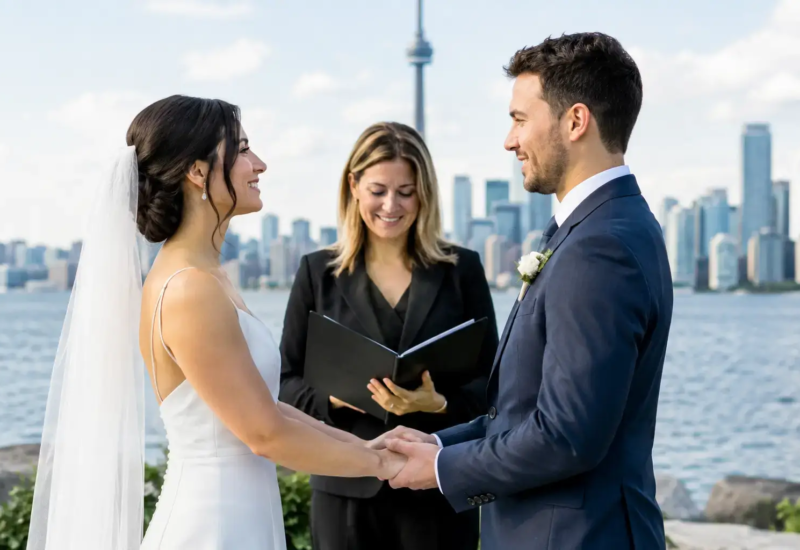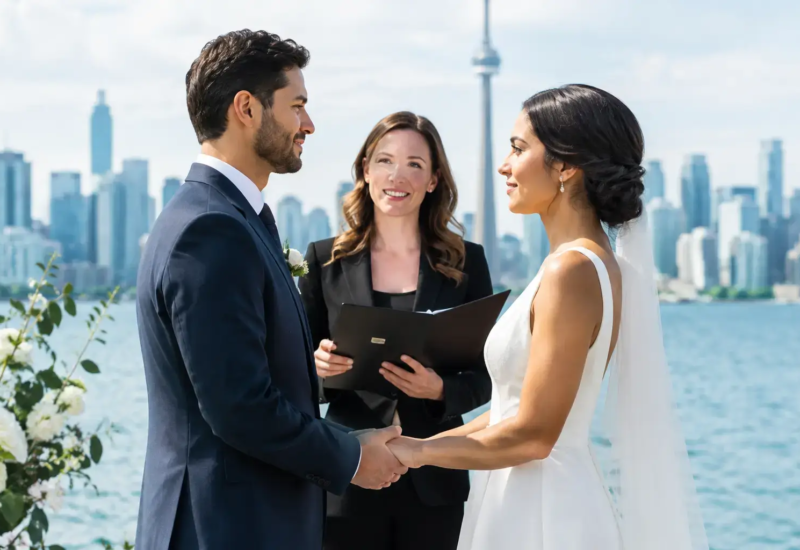
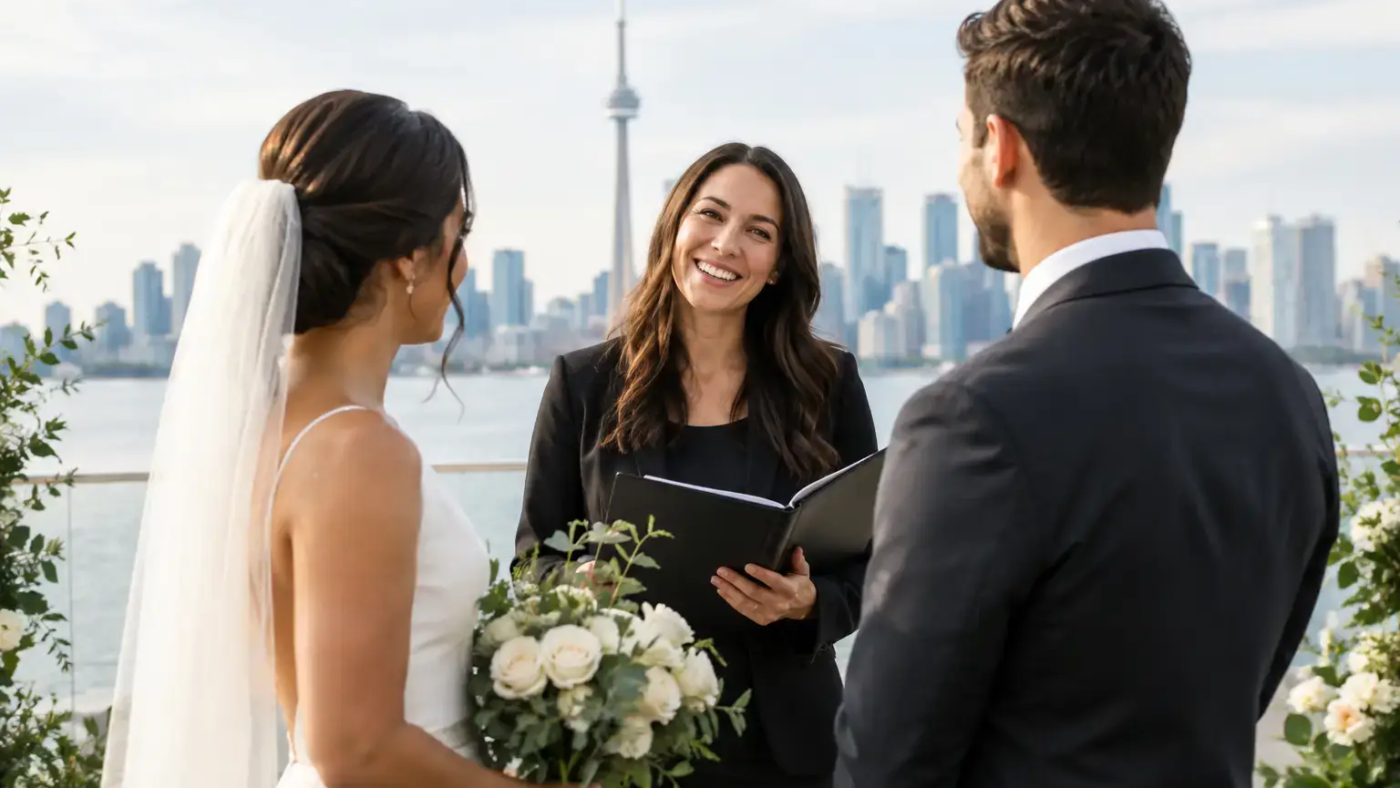
For couples typing micro wedding officiant GTA into a search bar, the need is usually more specific than a simple signature. You may be planning a restaurant dinner with your closest people, a private home ceremony, a city hall-adjacent gathering, or a quiet exchange of vows in a meaningful place. You want the legal details handled correctly, but you also want the moment to feel like yours.
A micro wedding asks for a different kind of attention. With fewer guests, there is less room to disappear into production. Every word lands. The person guiding your ceremony is not simply moving the schedule along. They are holding space for the promises you are making, while bringing steady clarity to the legal milestone beneath them.
What a Micro Wedding Officiant in the GTA Does
A micro wedding officiant in the GTA can provide far more than the legal words required to solemnize a marriage. The right level of support depends on the ceremony you are creating.
For some couples, a legal signing service is exactly right. They have already shared private vows, are holding a symbolic celebration later, or simply prefer a concise appointment focused on legal validity. In that setting, the officiant confirms the required documents, leads the legal declaration, oversees the signing, and ensures the marriage paperwork is completed with care.
Other couples want a fully officiated ceremony, even if it lasts only 15 or 20 minutes. This can include a welcome, a reflection on the relationship, personally chosen readings, vows, ring exchange, the legal declaration, and a warm closing. A short ceremony need not feel rushed or generic. Thoughtful writing gives even the smallest gathering room to breathe.
There is also a meaningful distinction between a symbolic ceremony and a legal marriage ceremony. A symbolic ceremony can be deeply personal and culturally flexible, but it does not create a legal marriage on its own. If legal recognition is part of your plan, you will need an authorized officiant, a valid Ontario marriage license, and two witnesses present for the signing. Knowing which service you need from the start prevents confusion later.
Begin With the Kind of Moment You Want
Before comparing officiants, it helps to describe your wedding without using package language. Ask yourselves what you want to remember about the ceremony. Perhaps you want it to feel peaceful, modern, spiritual without being religious, rooted in family traditions, or entirely secular. Perhaps you want to speak your own vows but need someone to create the structure around them.
These preferences shape the right fit. A couple hosting twelve guests may still want a carefully written ceremony and a rehearsal. Another couple may want only the legal essentials before leaving for a larger destination celebration. Neither choice is more meaningful. The ceremony should reflect the role it holds in your lives.
A good consultation makes room for these distinctions. It should feel less like selecting a script from a menu and more like a calm conversation about what matters to you. An experienced officiant will listen for the tone you want, ask practical questions about location and timing, and explain what is legally required without making the process feel heavy.
Look for Legal Confidence Without a Clinical Feel
Marriage ceremonies carry both emotional and administrative weight. In Ontario, the documents, declarations, witnesses, and registration process matter. A small guest count does not reduce those responsibilities.
This is where an officiant with legal fluency can bring real reassurance. You should feel confident that your marriage license will be reviewed, the required legal words will be included, and the signing will be handled properly. You should also know what will happen to the completed paperwork after the ceremony and understand that the official marriage certificate is requested separately after registration is processed.
Legal confidence should not make a ceremony feel formal in the stiff sense. The strongest officiants move naturally between these two roles: careful with the legal framework, attentive to the people standing before them. They can explain the practical steps clearly, then step back enough for the feeling of the moment to remain intact.
At AHANSA Life Foundation, that balance is informed by the work of a licensed paralegal, mediator, and Notary. For couples, the value is not legal language for its own sake. It is the quiet assurance that the details are being held responsibly.
Ask How the Ceremony Will Be Written
Micro weddings reveal whether a ceremony has been written with care. In a large ballroom, a generic script may be softened by music, movement, and the scale of the event. In a room with ten people, every sentence is closer. Guests can hear when the language is familiar, and they can feel when it has been chosen for the couple in front of them.
Ask a prospective officiant how they personalize a ceremony. Do they offer a consultation? Will they learn about your relationship, values, and the people who have shaped you? Can they respectfully include an interfaith element, a cultural reading, a moment of remembrance, or language that honors a nontraditional family structure?
Personalization does not require sharing every private detail. Some couples prefer a ceremony that is understated and elegant rather than story-heavy. Others want warmth, humor, and specific memories. The point is not to make the ceremony performative. It is to make it recognizable.
Vows deserve the same consideration. You may write your own, repeat guided vows, or choose a middle path. A skilled officiant can offer prompts and practical guidance so your vows sound like you rather than a version of you trying to impress a room. For many couples, this support is especially helpful when emotions run high and the guest list is intentionally close.
Consider the Pace of the Day
An intimate wedding often has a lighter schedule, but it still benefits from a clear plan. Ask whether your officiant offers a rehearsal or can provide ceremony guidance before the day. This is particularly useful if you have family members participating, a ring bearer, readings, or a venue with a tight timeline.
The trade-off is simple. A legal signing can be efficient and beautifully contained, but it leaves little space for processional cues, personal readings, or a ceremonial pause. A custom officiated ceremony takes more preparation, yet it allows the experience to unfold at a more considered pace. Neither is inherently better. It depends on whether the legal act is the whole occasion or one part of a broader celebration.
Location also affects the flow. A backyard, park, private dining room, or condo terrace may be perfect for a micro wedding, but each setting has practical considerations. Think about sound, weather, privacy, guest seating, and where the signing will take place. A calm officiant can help you anticipate these details without turning a small wedding into a production.
Choose Presence, Not Just Availability
Availability matters, especially for a date with personal significance. Yet an officiant’s presence matters long after the calendar is confirmed. Look for someone whose communication feels clear and respectful, who answers questions directly, and who does not pressure you toward a ceremony style that does not fit.
The right officiant will be composed when plans shift, warm without becoming overly familiar, and comfortable with silence when silence serves the moment. They will know when to guide and when to step aside. For a micro wedding, that steadiness becomes part of the atmosphere you create for yourselves and the people closest to you.
Your marriage ceremony does not need a large audience to carry weight. It needs truthful words, proper care for the legal details, and a person at the front who understands that a quiet yes can be one of the most powerful moments in a life together.