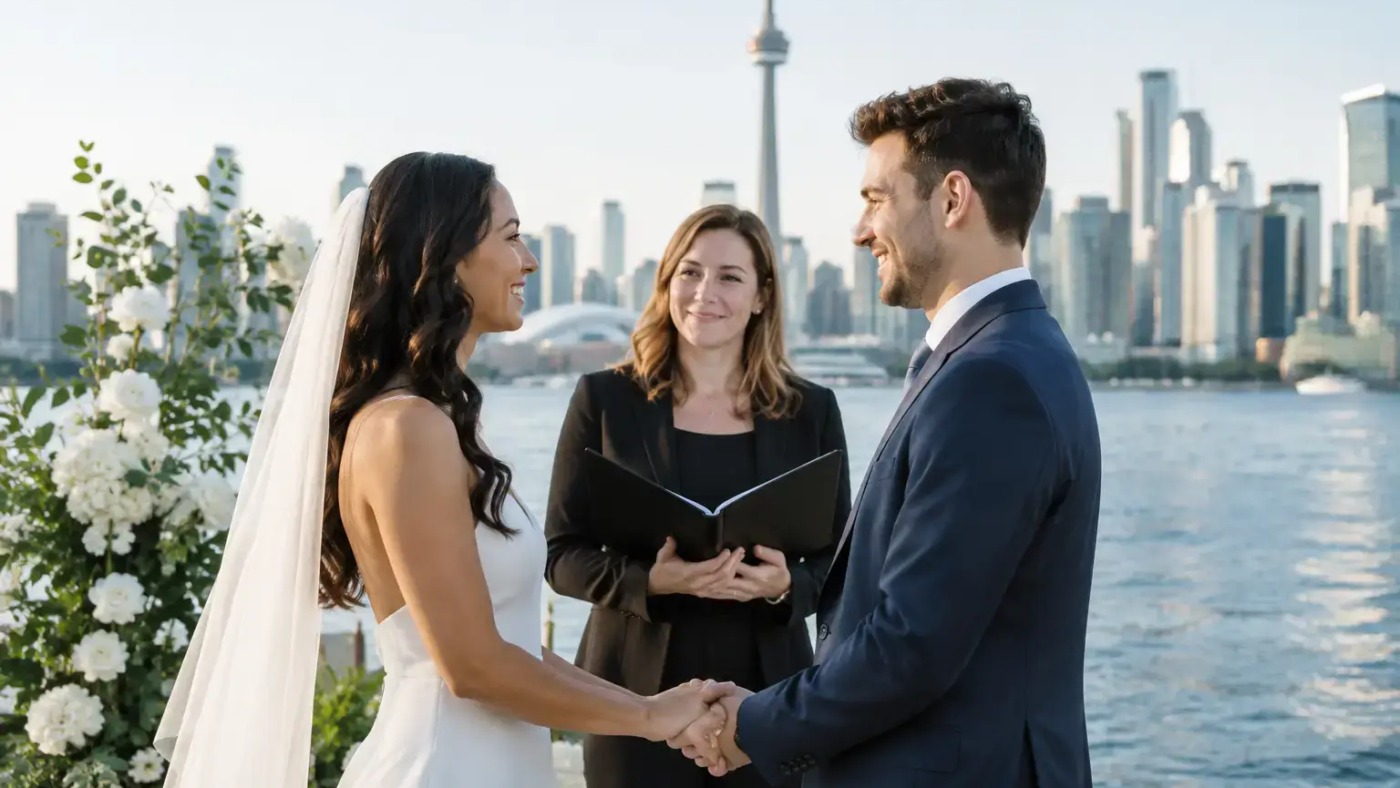
A secular wedding ceremony in Toronto can be deeply moving without borrowing beliefs, readings, or rituals that do not belong to you. For many couples, that is the point: to stand together in a meaningful place, speak honestly about the life they are building, and make the legal commitment with calm, clear intention.
A secular ceremony is not a lesser version of a traditional wedding. It is a thoughtful format for couples who want their values, relationship, and chosen promises at the center. It can be concise and private, or layered with personal stories, music, family involvement, and cultural touches that feel right to you. What matters is that every element has a reason to be there.
What makes a ceremony secular?
A secular wedding ceremony does not include religious doctrine, prayers, or faith-based language unless a couple intentionally chooses a small element that holds personal significance. Its foundation is human rather than religious: love, partnership, consent, responsibility, family, friendship, and the decision to make a life together.
That leaves considerable room for expression. A secular ceremony may include a welcome that recognizes the people who shaped your relationship, a reflection on the qualities you admire in one another, personal vows, a ring exchange, and a closing declaration of marriage. It can acknowledge heritage and family traditions without asking either person to perform a belief they do not share.
For interfaith, multicultural, nonreligious, and spiritually flexible couples, this distinction can bring real relief. The ceremony does not need to flatten the differences between you. It can hold them with respect, using language that feels inclusive and truthful.
Legal marriage and personal meaning are separate, but connected
In Ontario, a legally valid marriage requires more than a beautiful exchange of vows. Couples need a valid marriage license, an authorized officiant, and two witnesses present at the ceremony. The required legal declarations and documents must also be completed correctly.
The legal portion is usually brief. It does not need to overtake the atmosphere of the day, but it should never be treated casually. A composed officiant can guide you through the required moments clearly, then allow the rest of the ceremony to carry the voice and meaning of your relationship.
This is where couples often benefit from distinguishing between a legal signing, a civil ceremony, and a symbolic ceremony. A legal signing is generally the most concise option, centered on the required declarations, signatures, and registration. A civil ceremony is legally binding while allowing more space for vows and personal touches. A symbolic ceremony can be as personal and flexible as you wish, but it does not itself create a legal marriage.
There is no single right choice. Some couples prefer to complete the legal signing quietly and reserve a symbolic ceremony for a larger gathering. Others want one intimate occasion where the legal and emotional parts happen together. The best format is the one that gives you room to be present.
Designing a secular wedding ceremony Toronto couples can recognize as their own
Personalization does not require an elaborate production. Often, the most memorable ceremonies are carefully edited. A few well-chosen words can say more than a long script filled with familiar phrases that do not sound like either of you.
Begin with the feeling you want guests to leave with. Perhaps you want the ceremony to feel warm and intimate, light and joyful, quietly elegant, or grounded in the history you share. That emotional direction helps shape every decision, from the opening words to the music that accompanies your entrance.
Then consider what deserves a place in the ceremony. Your story may include the city where you met, a difficult season you moved through together, the people who welcomed each of you into their families, or the values that guide your partnership. These details are not decorations. When written with care, they help guests understand what they are witnessing.
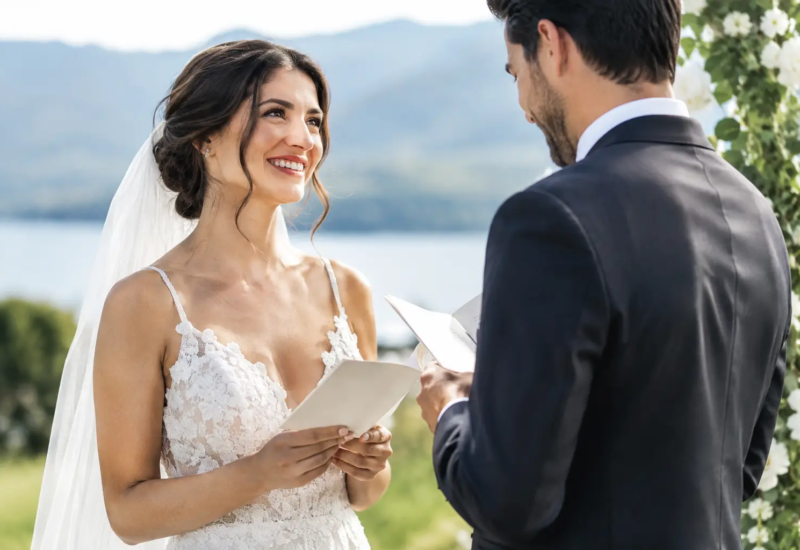
Personal vows are often the emotional center of a secular ceremony. They do not need to be literary or long. The strongest vows tend to be specific, sincere, and speakable. A promise to make coffee on difficult mornings may sit beautifully beside a promise to keep choosing honesty, tenderness, and shared growth. One is not more meaningful than the other.
If writing your own vows feels too exposed, you have options. You might answer a few prompts separately and have an officiant shape your words into a shared vow. You may repeat vows line by line. Or you may write private letters to exchange after the ceremony while speaking a simpler public promise. A good ceremony makes room for different comfort levels.
Rituals should add meaning, not fill time
Secular ceremonies can include rituals, but none are required. A unity candle, wine box, handfasting, tree planting, shared toast, or family blessing may be lovely when it reflects something real about the couple. When it is included simply because it appeared in another wedding, it can feel detached from the moment.
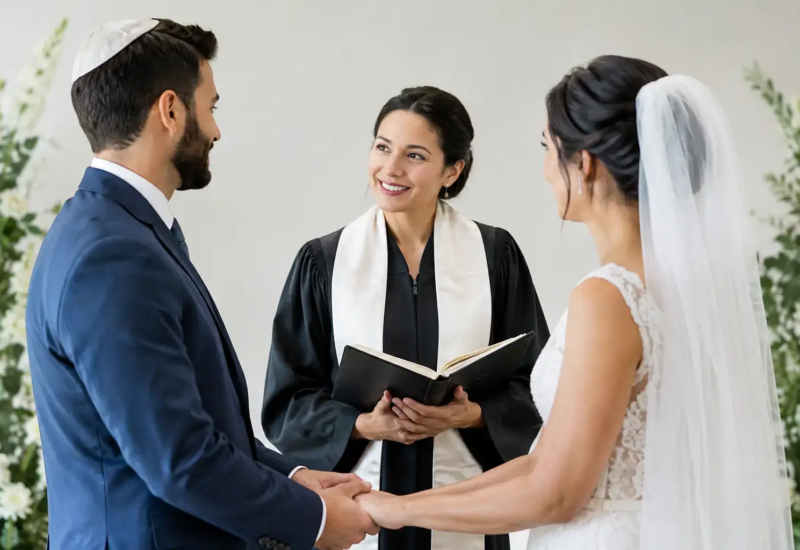
Cultural traditions deserve the same care. Couples sometimes worry that choosing a secular ceremony means setting heritage aside. It does not. You can honor family customs, languages, meaningful objects, or music without framing them as a religious requirement. The question is not whether a tradition is formal enough. It is whether it feels respectful, understood, and genuinely yours.
If a ritual involves parents, children, or close friends, explain its significance briefly. Guests do not need a lecture, but a sentence of context helps everyone remain connected to what is unfolding.
The value of an officiant who can hold both parts
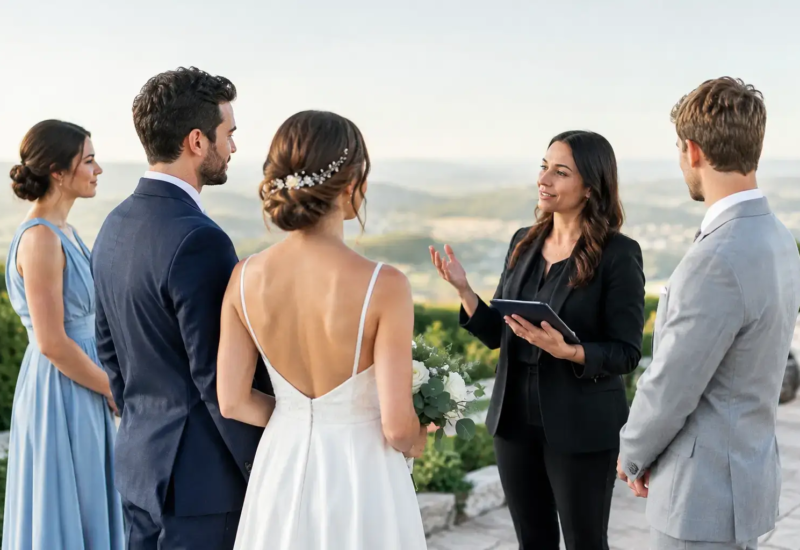
Your officiant is not simply there to read a script and collect signatures. They set the pace of the ceremony, guide transitions, help steady nervous hands, and make sure every required step is handled with care. Their presence matters especially in intimate settings, where there is nowhere for rushed energy or generic language to hide.
Look for someone who listens before they write. A strong consultation should help you identify what you want to include, what you would rather leave out, and where you may need practical guidance. Ask how the ceremony is customized, whether you can review the script, how legal documents are handled, and whether rehearsal support is available.
At AHANSA Life Foundation, this work is approached with both ceremonial care and legal fluency. Couples can choose a concise signing, a civil ceremony, or a fully personalized officiated experience, with language shaped around the relationship rather than a template. The goal is never to make the moment bigger than it is. It is to let every word land.
A few practical details that protect the calm
Choose your ceremony location with sound and privacy in mind. A public park, restaurant patio, gallery, home, or small event venue can all work beautifully, but each has different considerations. Outdoor spaces may need a weather plan. Busy settings may require a microphone. A home ceremony may call for a clear gathering area and a simple place to sign documents.
Give your witnesses a clear role ahead of time. They should know when they are needed, where they will stand, and that they will sign the marriage documents following the ceremony. If you are planning an intimate wedding, this small bit of preparation prevents unnecessary uncertainty.
Finally, leave space in the schedule. A secular ceremony does not need to be long to feel substantial, but it should not be hurried. Build in a few quiet minutes before guests arrive and after the signing is complete. Those pauses are often where the day becomes most real.
Your ceremony does not need to explain or defend what you believe. It only needs to reflect the promises you are ready to make, the people you want beside you, and the life you are choosing with care.