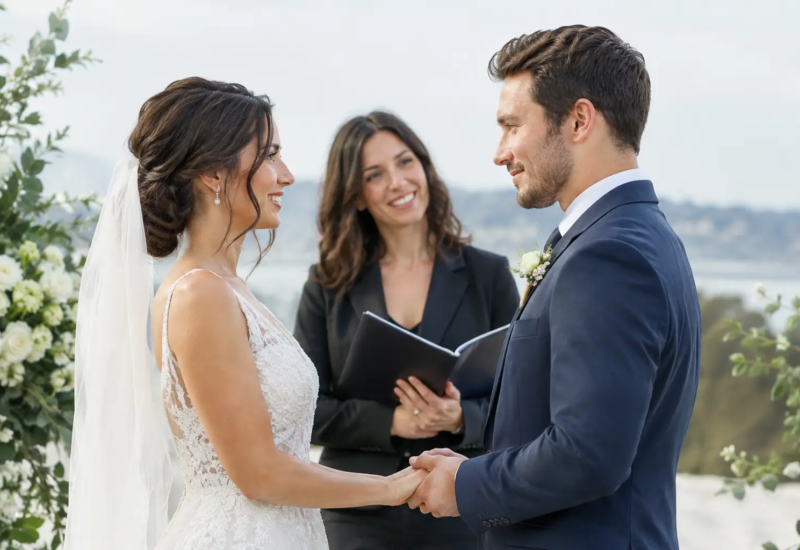

A marriage signing Toronto couples choose does not need a ballroom, a long guest list, or a tightly choreographed entrance to feel significant. It can happen in a quiet room, at home with the people closest to you, or in a meaningful corner of the city. What matters is that the legal steps are handled correctly and that the moment still gives you room to breathe.
For some couples, a simple signing is the wedding. For others, it is the legal foundation beneath a celebration planned for another day, another country, or another season. Both choices are valid. The right format is the one that reflects your relationship without asking you to perform a version of marriage that does not feel like your own.
What Marriage Signing in Toronto Actually Includes
A legal marriage signing is a concise, legally valid marriage ceremony conducted by an authorized officiant. It is not simply signing paperwork. In Ontario, the legal act of marriage requires the right documents, an authorized officiant, and two witnesses who are present for the ceremony and signing.
The ceremony itself can be brief and still hold meaning. There are required legal declarations, followed by the signing of the marriage license by both partners, the two witnesses, and the officiant. Afterward, the officiant completes the required registration process so the marriage can be recorded by the province.
A marriage license is generally valid for 90 days from its date of issue. Couples should arrange it before the signing appointment and bring it with them, along with valid identification as requested when obtaining the license. A calm signing experience begins with these practical details being clear well before the day arrives.
The difference between a legal signing and a symbolic ceremony
A legal signing creates a legally recognized marriage in Ontario. It requires the marriage license, witnesses, and an authorized officiant. A symbolic ceremony, by contrast, can be as personal, spiritual, interfaith, secular, or culturally specific as you wish, but it does not itself create a legal marriage.
Some couples choose to complete a legal signing first and hold a larger symbolic ceremony later. This can be especially helpful when family members are traveling, when a venue date falls outside the license window, or when partners want the legal portion to remain private. There is no lesser meaning in separating the legal and ceremonial moments. It simply gives each one the space it needs.
A short ceremony can still be personal
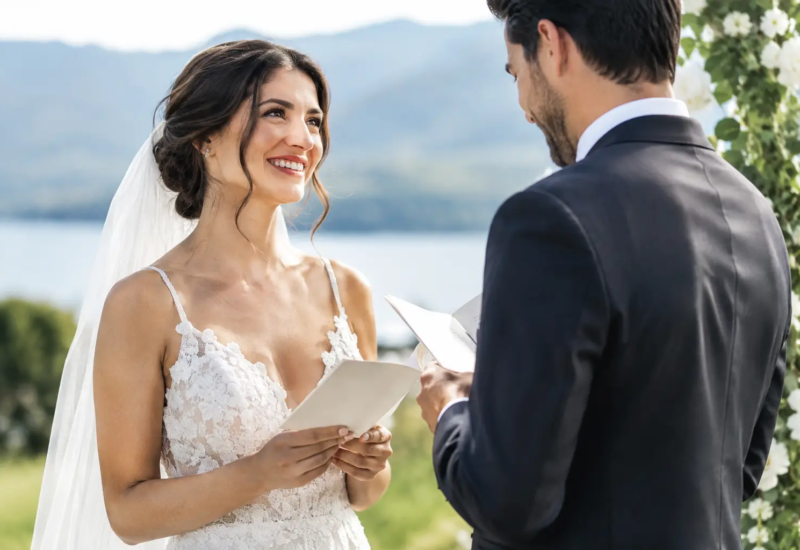
“Simple” should not mean impersonal. Even within a concise legal format, there is room for a warm welcome, a few words about commitment, personal vows, rings, or a brief acknowledgment of those who have supported you. The shape of the ceremony depends on what feels true to you.
The trade-off is straightforward. A legal signing is designed for clarity and efficiency, while a fully officiated custom ceremony gives more room for your story, readings, rituals, and the voices of family or friends. Neither is inherently better. The question is whether you want a focused legal moment or a more developed ceremony with guests at its center.
When a Simple Signing Is the Right Choice
A marriage signing often suits couples who value privacy, flexibility, and a composed experience. You may be planning a dinner afterward instead of a reception, preparing for an overseas celebration, or simply wanting to be married without the pressure of a large event. It may also be the best choice if your ideal wedding has always been small.
It can be particularly practical for couples coordinating different faith traditions, families living in different places, or work schedules that make a full wedding weekend difficult. The legal appointment offers a steady point of certainty. You can marry now and create a wider celebration when it feels right.
A concise signing can also be a thoughtful choice after a period of loss, illness, immigration-related planning, or other major life changes. In these circumstances, couples often want professional guidance without spectacle. The tone can remain gentle and dignified while the legal requirements are managed with care.
Choosing an Officiant for a Marriage Signing in Toronto
For a legal ceremony, the officiant’s authority and attention to detail matter as much as their presence in the room. Ask whether the officiant is authorized to solemnize marriages in Ontario, what you need to bring, how many witnesses are required, and what happens to the signed marriage license after the ceremony.
You should also ask how the ceremony will feel. A technically correct signing can still feel rushed if there has been little communication beforehand. The most reassuring officiants explain the process in plain language, confirm the logistics in advance, and create a pace that lets every word land.
At AHANSA Life Foundation, this balance is central to the work. Legal fluency is paired with a grounded, personal approach, so couples can arrive knowing the administration is being handled carefully and the moment will still feel like theirs.
Questions worth answering before you book
Before confirming a signing, consider the setting, guest count, timing, and the role you want the ceremony to play in your wedding story. A home signing may feel intimate but require more thought around space and privacy. A park or outdoor setting can be beautiful, though weather and noise may affect the experience. A private indoor location offers predictability, especially during Toronto winters.
It also helps to decide whether you would like to exchange personal vows. If you do, write only what you can comfortably say aloud. A few sincere lines often carry more weight than a long speech. If you prefer not to speak personal vows in front of witnesses, a simple legal declaration can be enough.
The Day of Your Legal Signing
Bring the original marriage license and ensure your two witnesses are adults who can be present throughout the legal portion of the ceremony. Arrive a little early, particularly if you are meeting at a location with parking, building access, or security procedures. Small buffers protect the atmosphere from becoming hurried.
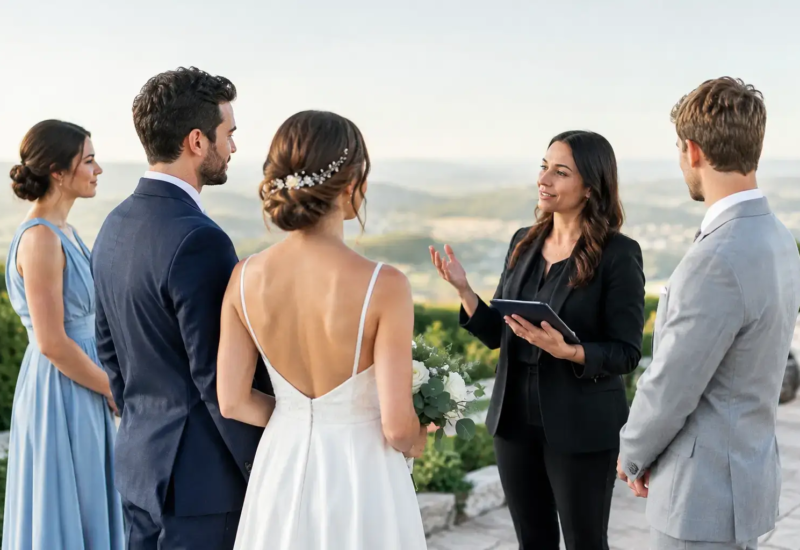
Your officiant will guide the order of events. Typically, there is a brief opening, the required declarations, any vows or ring exchange you have chosen, a pronouncement, and the signing. The signing is an important part of the ceremony, but it does not need to feel administrative. Pausing for a photograph, a deep breath, or a private look across the table can make the moment feel properly held.
After the ceremony, keep any keepsake document you receive in a safe place. The official marriage certificate is requested from the province after the marriage has been registered. That certificate is generally the document needed when you later update identification, benefits, travel records, or other official accounts.
Let the Moment Be Enough
There is a quiet confidence in choosing a wedding that fits your life rather than someone else’s expectations. Whether your marriage signing is attended by two witnesses or a small circle of loved ones, it marks a real threshold: a promise made, witnessed, and legally recognized.
Choose the setting, words, and level of ceremony that allow you to be present with each other. A steady presence, clear legal guidance, and a few unhurried minutes can be more than enough for your most important yes.